
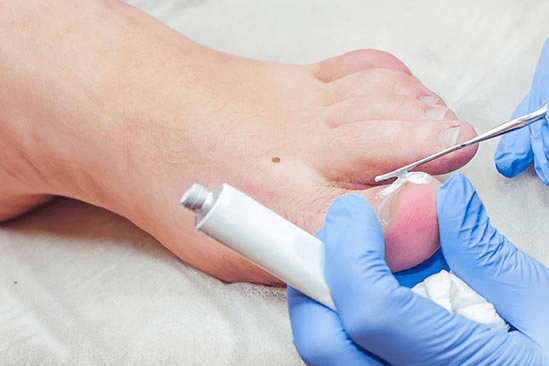
About 20 percent of all visits to the doctor for foot complaints involve ingrown toenails, known medically as onychocryptosis. Because the nail grows into the surrounding skin, the condition can be very painful. The most common cause is poorly fitting footwear.
If you have ingrown nails, our podiatrists will perform a physical examination and review surgical and non-surgical options to relieve your pain. We’ll also talk through recovery time and when you can expect to return to work and your usual activities.
What is an ingrown toenail?
An ingrown toenail develops when a corner of the nail grows into the skin, most often on the big toe. Tight shoes, improper trimming, or the natural shape of the nail can contribute to the condition. Sandals and warm-water soaks may reduce pressure in mild cases.
Because an ingrown nail can allow bacteria into irritated skin, seek medical care for pus, spreading redness, severe pain, or fever.
Symptoms of an ingrown toenail
- Pain or tenderness along one or both sides of the nail
- Redness or swelling around the nail
- Skin growing over the edge of the nail
- Drainage, pus, or worsening pain when infection is present
Ingrown toenail surgery
Ingrown toenail surgery is an outpatient procedure performed in the office. The doctor numbs the area with a local anesthetic before treating the affected nail. Surgical options include:
- Toenail removal (entire toenail is removed)
- Wedge resection (part of the toenail is removed)
- Matrixectomy (if nail removal and wedge resection fail, it may be necessary to remove the nail bed in addition to the nail)
- Toe-tip surgery (soft tissue at the tip of the toe is removed and reshaped)
A consultation with your surgeon is required to determine which procedure is appropriate for your diagnosis.
Recovery after nail surgery
The wound may take several weeks to heal, with pain gradually decreasing during that time. If the nail is expected to regrow, the process can take several months. Nonsteroidal anti-inflammatory medications may reduce pain and swelling after surgery.
Our foot and ankle surgeons will provide a diagnosis, treatment, and aftercare instructions.