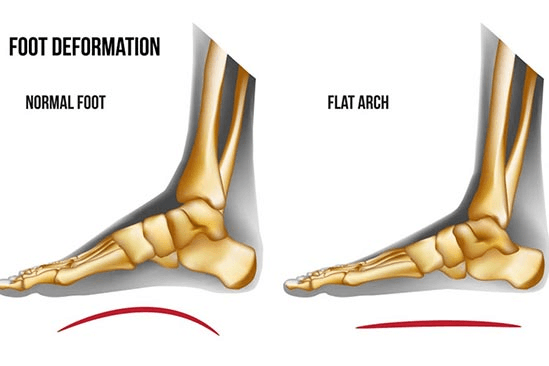
Flat feet occur when the arch of the foot collapses, causing the entire sole to contact the ground. This common condition can cause pain, fatigue, and difficulty with walking or standing for long periods. When conservative treatments are not enough, surgical reconstruction may be recommended.
The foot and ankle team at Downtown Podiatry Physicians will perform a thorough examination, obtain imaging as needed, and review surgical and non-surgical options to reduce pain and restore function. Your care team will also discuss recovery time, return to work, and activity.
What are flat feet?
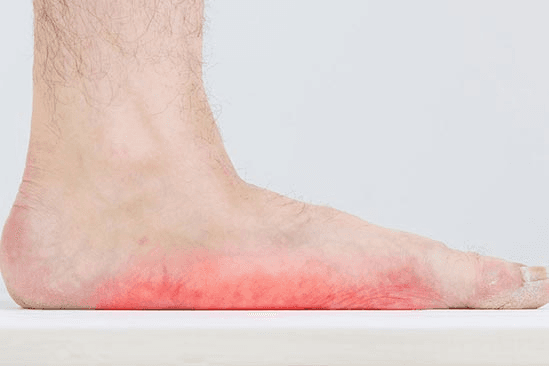
Flat feet occur when the arches are low or absent and more of the sole touches the ground. The condition often starts in childhood when the ligaments and tendons that support the arch do not create a typical arch shape.
Risk factors for flat feet
- Rheumatoid arthritis
- Diabetes
- Foot or ankle injury
- Obesity
What causes flat feet?
Flat feet are normal in infants and toddlers because their arches are not fully developed. In some children, the arch remains low as they grow. An arch can also fall later in life after years of wear weaken the supporting tendons.
Some people with low arches have no symptoms, while others develop pain or fatigue. Our foot and ankle team will evaluate your foot and provide a diagnosis and personalized treatment options.
Surgical treatment of flat feet
Flat foot reconstruction repairs the tendons, ligaments, and bones that support the arch. The goal is to improve alignment and create a better-supported foot.
Which flat foot procedure is appropriate?
The procedure depends on the type and severity of the deformity, the amount of pain, and how much the condition limits daily activity. Your surgeon will explain the recommended approach after an examination and review of your imaging.
Benefits and risks of flat foot surgery
Surgery may improve alignment, mobility, and long-term support. Recovery can take six to eight weeks or longer and may include physical therapy and time in a cast. Possible complications include blood clots, infection, nerve injury, delayed bone healing, and persistent or worsening symptoms.
Your surgeon will review these considerations during your consultation.